
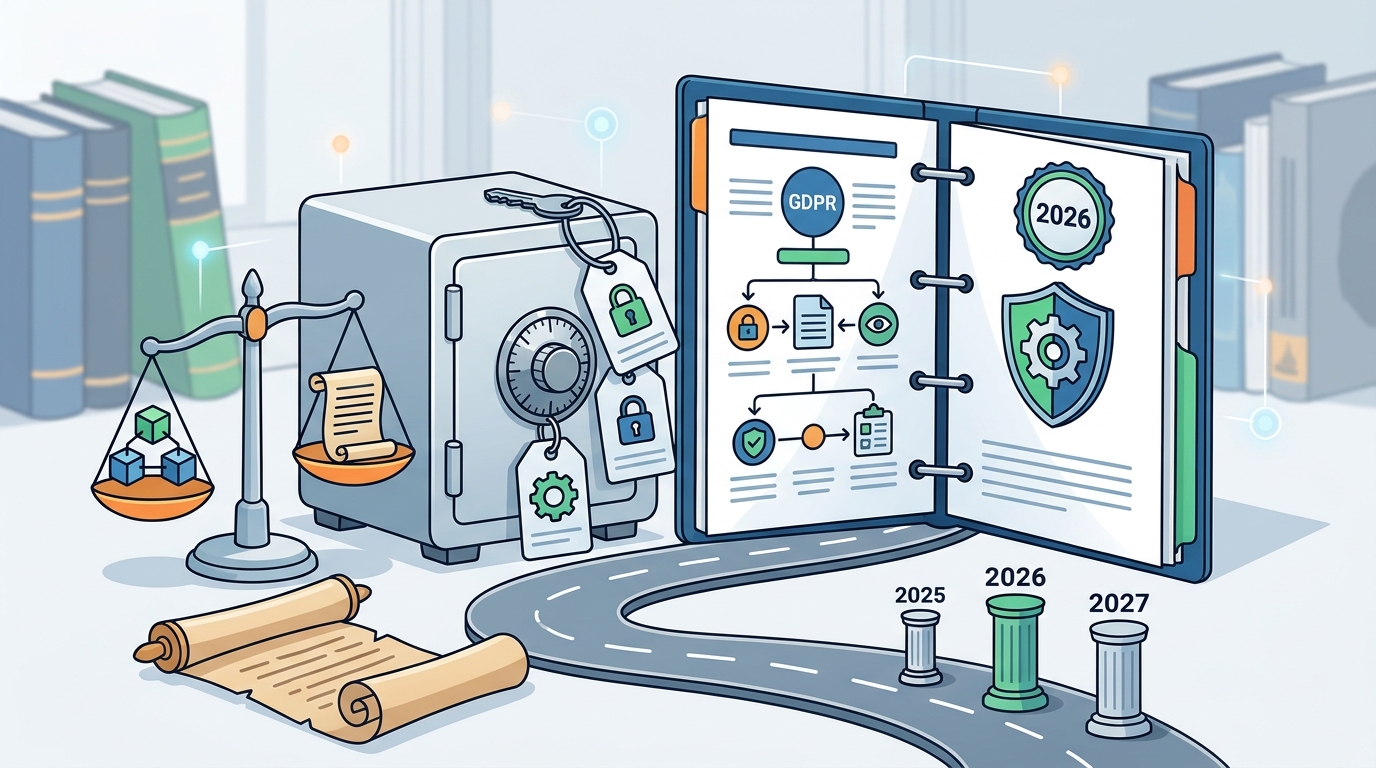
Implementing integrated skills tracking systems requires strict adherence to data privacy laws, AI regulations, and labor rights. Companies must ensure that employee data is processed lawfully, that AI algorithms are transparent, and that no automated decisions are made without human oversight. The Wise Skill positions itself as a compliant partner, offering a platform aligned with the EU AI Act and certified under ISO 27001 and ISO 42001 to help organizations navigate these complex legal landscapes safely.
GDPR and Data Privacy Obligations
The EU AI Act and Algorithmic Transparency
The EU AI Act introduces a risk-based approach to artificial intelligence regulation. The EU AI Act is a regulatory framework that classifies AI systems by risk level and imposes specific obligations on high-risk systems. Skills tracking systems that influence employment decisions, such as promotions, training assignments, or terminations, are often classified as high-risk. This classification triggers strict requirements for transparency, human oversight, and accuracy.
Companies must ensure that their AI systems are explainable. Employees have the right to understand how an algorithm reached a specific conclusion about their skills or potential. The Wise Skill is aligned with the EU AI Act, ensuring that its Talent Engine provides clear explanations for its recommendations. The platform operates on the principle that AI proposes, but humans decide. No AI output becomes an automatic decision about a person. This human-in-the-loop approach is a critical legal safeguard that prevents algorithmic bias from resulting in unlawful employment actions.
Labor Rights and Employee Consent
Beyond data privacy, labor laws protect employees from undue surveillance and coercion. Employee consent is the voluntary and informed agreement required before processing personal data for non-contractual purposes. While employers have a legitimate interest in assessing workforce capabilities, they cannot force employees to participate in skills tracking if it is not essential for their current role. In many jurisdictions, works councils or employee representatives must be consulted before deploying new monitoring technologies.
Transparency is key. Employees must know exactly what data is being collected, how it will be used, and who has access to it. The Wise Skill provides a transparent interface where employees can see their own data and understand how it contributes to their development. This openness builds trust and reduces legal risk. Companies should avoid using skills data for punitive purposes without clear, pre-communicated policies. The focus should remain on development and strategic alignment, not surveillance.
Security Standards and Certifications
Additionally, ISO 42001, the standard for AI management systems, is becoming increasingly important. It demonstrates that an organization has established a framework for responsible AI development and deployment. For companies in regulated industries, such as finance or healthcare, these certifications are often a prerequisite for vendor approval. Choosing a platform with these certifications reduces legal liability and simplifies the procurement process. It signals that the vendor takes data protection and AI ethics seriously.
Cross-Border Data Transfers
Key Takeaways
- GDPR compliance requires a valid legal basis, data minimization, and regular Data Protection Impact Assessments for employee data.
- The EU AI Act classifies skills tracking as high-risk, mandating transparency, explainability, and human oversight in decision-making.
- Employee consent and works council consultation are essential legal steps before deploying new monitoring technologies.
- ISO 27001 and ISO 42001 certifications are critical indicators of a vendor's commitment to security and responsible AI.
- Cross-border data transfers require specific safeguards, such as Standard Contractual Clauses, to comply with international privacy laws.
- The Wise Skill is aligned with the EU AI Act and certified under ISO 27001 and ISO 42001, providing a compliant foundation for skills tracking.
Frequently Asked Questions
Is skills tracking considered surveillance under labor laws?
Do I need explicit consent to track employee skills?
Explicit consent is often required if the tracking goes beyond what is necessary for the employment contract. If skills tracking is essential for the role, legitimate interest may suffice, but employees must still be informed. Consulting with legal counsel and works councils is recommended to determine the appropriate legal basis.
How does the EU AI Act affect my skills tracking platform?
The EU AI Act requires high-risk AI systems to be transparent, accurate, and subject to human oversight. Your platform must provide explanations for its recommendations and ensure that no automated decisions are made without human review. The Wise Skill is aligned with these requirements, ensuring that AI proposes and humans decide.
What are the penalties for non-compliance with GDPR?
Penalties for GDPR non-compliance can be up to 4% of global annual turnover or 20 million euros, whichever is higher. These fines are in addition to potential civil lawsuits and reputational damage. Ensuring compliance through proper data handling and vendor selection is crucial to avoiding these risks. Learn more: Tu estrategia convertida en.